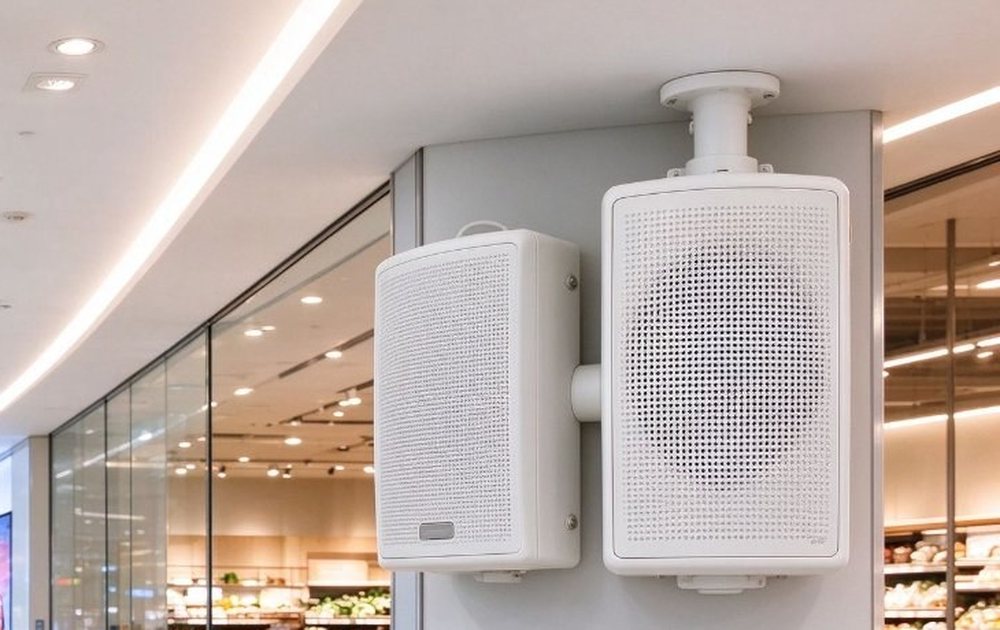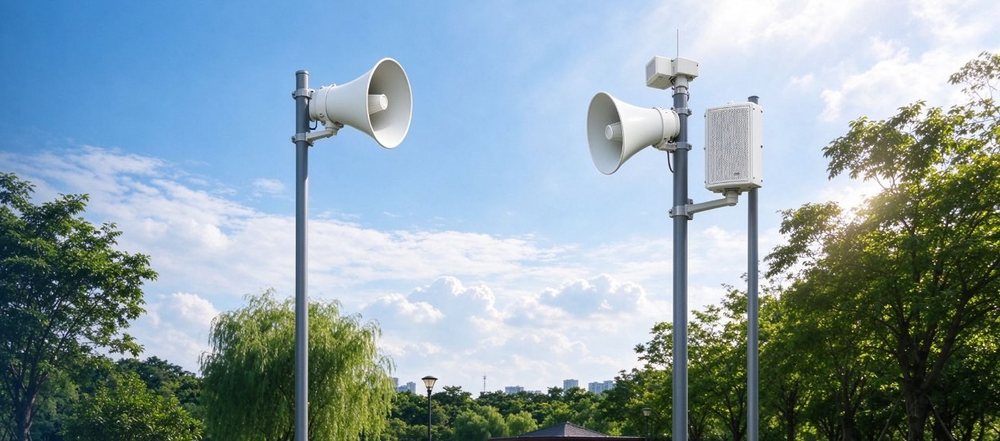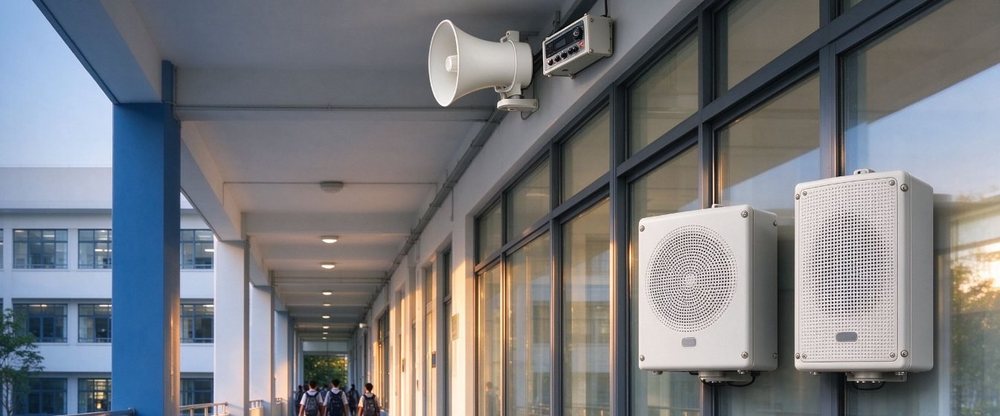
The 100V line is simple, cheap, and lets one amplifier drive dozens of loudspeakers. The catch is that everything plays together, zoning needs relay switching, and one fault silences a whole leg of the circuit.
PoE network audio changes all three: every speaker has its own address, zones are drawn in software rather than wired in a rack, a fault points to a single device, and level, EQ and delay are set per unit. The price is switch port count and network management.
Do the ten-year arithmetic. A 100V system is 20–30% cheaper up front, but retrofit, expansion and fault-finding labour usually close that gap by year five. New campuses now go straight to IP.
- New build: IP first, reserve PoE switch ports in the riser
- Retrofit: keep the existing cable, replace the endpoints
- Hybrid: IP for zoning and paging, 100V for legacy loudspeakers